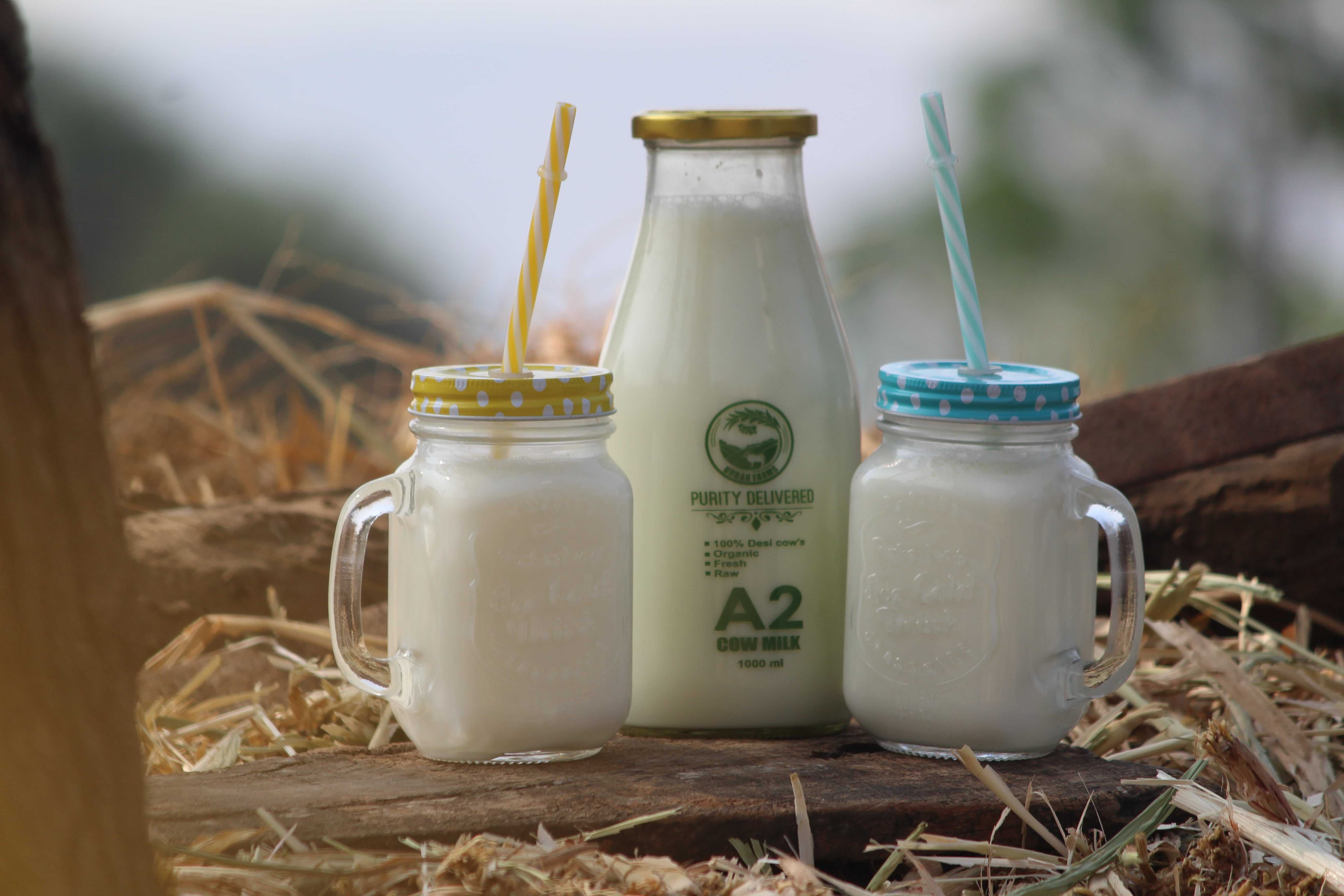
Most people who switch to A2 raw milk do so because regular milk was giving them trouble. Bloating, gas, heaviness after a glass. Symptoms they assumed were lactose intolerance. In many cases, the problem was not lactose at all. It was a protein. This guide explains what A2 beta-casein is, why it behaves differently in your body than the A1 protein in conventional milk, and what the research actually says.
Key Takeaways
- A2 and A1 milk differ in a single amino acid in the beta-casein protein, but that difference significantly changes how the milk is digested
- A1 beta-casein releases a peptide called BCM-7 during digestion, which is linked to digestive discomfort and inflammation in sensitive individuals. A2 beta-casein does not
- A 2025 randomized human trial found that people with GI discomfort from conventional milk showed measurable improvement on A2 milk
- Raw A2 milk also retains native enzymes, beneficial bacteria, and heat-sensitive nutrients that pasteurization reduces
- Pennsylvania is one of the most permissive states in the country for raw milk, retail and on-farm sales are both legal with a state permit
- Rural Valley Farms in Butler County PA produces A2A2 raw milk from pasture-raised cows and sells direct to families
What Is A2 Milk and How Is It Different From Regular Milk
All cow's milk contains a protein called beta-casein. What most people do not know is that beta-casein comes in two main genetic variants: A1 and A2. The difference between them is a single amino acid at position 67 in the protein chain. In A1 beta-casein, that position is occupied by histidine. In A2, it is proline.
That one substitution changes everything about how the protein is digested. When A1 beta-casein is broken down in the gut, it releases a peptide fragment called beta-casomorphin-7, or BCM-7. When A2 beta-casein is broken down, the proline at position 67 acts as a structural block . BCM-7 is not released.
- Contains histidine at position 67
- Releases BCM-7 during digestion
- BCM-7 linked to inflammation and GI discomfort
- Dominant in Holstein and Friesian breeds
- Found in most commercial supermarket milk
- Contains proline at position 67
- Does not release BCM-7 during digestion
- Digests more similarly to human breast milk
- Natural in Jersey, Guernsey, and heritage breeds
- Found in raw farm milk from A2A2-tested herds
Historically, all cows produced A2 milk. The A1 mutation emerged thousands of years ago in European cattle and was then amplified through modern selective breeding programs that prioritized milk volume over protein composition. The result is that most commercial dairy today, including the milk on grocery store shelves, comes from A1 or mixed A1/A2 cows, not A2A2 animals.
What BCM-7 Does in the Body and Why It Matters
BCM-7 is an opioid peptide, a short protein fragment that can interact with opioid receptors in the gut and, in some individuals, beyond the gut wall. Research in animals has shown that A1 beta-casein increases digestive transit time and elevates inflammatory markers in gut tissue. Human studies have been more variable, but the digestive evidence has grown considerably stronger in recent years.
A peer-reviewed study published in PLOS One in May 2025 enrolled 35 participants who experienced consistent gastrointestinal discomfort after consuming conventional milk. Using a randomized double-blind crossover design, researchers found that switching participants to A2 milk produced measurable positive changes in gut microbiota composition compared to conventional A1/A2 milk. The researchers analyzed stool samples using 16S rRNA gene sequencing and found differences in beneficial bacteria populations between the two groups.
What the research says plainly: The strongest evidence for A2 milk is in digestive comfort. People who bloat, experience gas, or feel heavy after conventional milk, and who have tested negative for clinical lactose intolerance, are frequently reacting to BCM-7 from A1 casein, not to lactose. Switching to A2 milk resolves symptoms for many of these individuals.
Researchers have also studied links between A1 casein consumption and longer-term outcomes including type 1 diabetes, cardiovascular markers, and neurological function, though these associations are more preliminary and require further human studies before firm conclusions can be drawn. The digestive evidence is the most robust and most relevant for most consumers.

The Raw Milk Layer: What Pasteurization Changes
A2 milk and raw milk are two separate things that frequently come together on farms like Rural Valley Farms. A2 refers to the protein genetics. Raw refers to whether the milk has been pasteurized. Understanding both layers matters when you are evaluating what you are actually buying. Families who already purchase our pasture-raised meats often ask about raw dairy as a natural next step.
Pasteurization uses heat to reduce pathogen risk. What it also does is alter the living components of milk, including the enzymes, beneficial bacteria, and some heat-sensitive nutrients that are present in fresh raw milk from a healthy herd.
| Component | Raw Milk | Pasteurized Milk | Note |
|---|---|---|---|
| Native Enzymes (lipase, lactase, protease) | Fully active | Largely deactivated by heat | Support digestion and nutrient absorption |
| Beneficial Bacteria | Present and active | Eliminated | Lactobacillus strains support gut flora |
| Immunoglobulins and Whey Proteins | Intact | Partially denatured | Support immune function |
| Fat-Soluble Vitamins (K2, A, D) | Full levels | Slightly reduced | Higher in grass-fed milk regardless of processing |
| Calcium and Protein | Fully present | Fully present | Heat-stable macronutrients are unaffected by pasteurization |
| Pathogen Risk | Present if herd or hygiene is poor | Significantly reduced | Well-managed tested herds have very low baseline risk |
A note on safety: Raw milk from a well-managed, tested herd carries a different risk profile than raw milk from an unknown source. Rural Valley Farms holds the Pennsylvania Department of Agriculture permit required for raw milk sales, which involves regular testing of the herd and the milk. The permit process exists precisely to ensure animals are disease-free and milk handling meets state standards. For high-risk individuals, pregnant women, infants, the immunocompromised, and the elderly. For these groups, pasteurized milk remains the standard medical recommendation.
Ready to Try A2 Raw Milk from Our Farm?
Call to check availability and arrange pickup at Rural Valley Farms, Butler County PA.
Which Cow Breeds Produce A2 Milk
Not every cow produces A2A2 milk. The A2A2 genotype, meaning the animal carries two copies of the A2 gene and produces only A2 beta-casein, is most common in heritage and traditional breeds. Modern high-volume commercial breeds were selected for yield, not protein genetics, and commonly carry the A1 variant.
The definitive method for confirming A2A2 status is genetic testing. Farms serious about selling A2 milk test each animal individually and can confirm whether it carries A2A2, A1A2, or A1A1 genetics. Only A2A2 animals produce 100 percent A2 beta-casein in their milk. Mixed A1A2 cows produce a blend.
At Rural Valley Farms: Our pasture-raised dairy herd is tested for A2A2 genetics. When you buy raw milk from our farm, you are buying from animals confirmed to produce A2 beta-casein exclusively, not a mixed-herd blend that may still contain significant A1 protein.
Is Raw Milk Legal in Pennsylvania
Pennsylvania is one of the most permissive states in the country for raw milk sales. While neighboring states like New Jersey and Maryland prohibit raw milk sales entirely, Pennsylvania permits both retail store sales and direct on-farm sales under its Milk Sanitation Law. Families in the Pittsburgh area can find A2 raw milk near Pittsburgh at Rural Valley Farms, about an hour from the city in Butler County.
To sell raw milk legally in Pennsylvania, a farm must hold an annual permit from the Pennsylvania Department of Agriculture. Obtaining the permit requires passing regular milk quality tests, maintaining a disease-free certified herd, meeting facility cleanliness standards, and demonstrating that the water supply is bacteriologically safe. The permit process includes unannounced testing by state-approved laboratories.
- Raw milk retail store and restaurant sales are legal in Pennsylvania
- Direct on-farm raw milk sales are legal. Customers can bring their own containers
- Pennsylvania Department of Agriculture issues annual permits to qualified farms
- Permitted farms must pass regular unannounced milk quality testing
- The herd must be annually certified free from brucellosis and tuberculosis
- Interstate transport of raw milk remains federally prohibited. It must be consumed in-state
Pennsylvania vs. neighboring states: New Jersey and Maryland both prohibit raw milk sales entirely. Ohio allows on-farm sales only through herd-share arrangements. Pennsylvania's legal framework is notably broader. Retail stores, restaurants, and farms can all sell raw milk with the proper permit. For western PA families near the Ohio or New Jersey border, Pennsylvania farms are often the only legal local source.
What Does A2 Raw Milk Actually Taste Like
The flavor difference between A2 raw milk from a pasture-raised herd and standard supermarket milk is significant enough that most first-time buyers comment on it immediately. Store milk is pasteurized, homogenized, and often pooled from many farms. A2 raw milk from a single well-managed farm tastes like what milk used to taste like before industrial processing became the norm.
Jersey milk from the most common A2 breed on small Pennsylvania farms runs at 4.5 to 5.5 percent butterfat, compared to 3.25 percent for standard whole milk. The result is a noticeably richer, creamier texture. Because the milk is unhomogenized, the cream separates and rises to the top. Shaking or stirring redistributes it. Many families prize this cream layer for coffee, baking, or making butter.
The flavor also varies slightly with the season and the pasture. Milk from late spring and early summer, when cows are on lush new growth, tends to be the richest and most aromatic. Milk from winter-fed cows is still excellent but slightly more neutral. This seasonal character is one of the things families who buy direct from farms find most enjoyable. It is a product with a genuine sense of place and time.
Who Benefits Most From Switching to A2 Raw Milk
A2 raw milk is not for everyone, and the decision to switch involves both individual health considerations and a personal assessment of the risk profile of raw dairy. That said, certain groups consistently report the most dramatic improvements after making the switch. Many of the families we work with for bulk beef orders in western Pennsylvania also add raw dairy to their order once they visit the farm.
- People who experience bloating or gas from conventional milk but tested negative for lactose intolerance. This is the most common profile. The issue is frequently BCM-7 from A1 casein, not lactose. A2 milk resolves this for many people.
- Families who want minimally processed food. Raw milk from a permitted farm is as close to the source as dairy gets. No homogenization, no ultra-pasteurization, no additives.
- People who want to support local farms directly. Buying raw milk from a Butler County farm keeps money in the local agricultural economy and gives you a direct relationship with the people raising the animals.
- Families already buying grass-fed beef who want the same standard for their dairy. The philosophy of knowing your farmer and your food source extends naturally from meat to dairy.
- Pregnant women, infants, the elderly, and immunocompromised individuals should follow standard medical guidance and discuss raw dairy with a healthcare provider before consuming it.
If you are also interested in bulk beef: Rural Valley Farms offers pasture-raised half and whole cow shares alongside our raw dairy. See our half cow cost guide for full pricing details, or our freezer space guide to make sure you are set up before ordering. You can also browse our full dairy offerings, farm eggs, farm pantry, and fresh-baked breads.
Frequently Asked Questions
The A2 raw milk questions we hear most from Pennsylvania families before their first purchase.
Ready to Try A2 Raw Milk From Our Farm?
Pasture-raised, A2A2-tested, state-permitted raw milk sold direct from Rural Valley Farms. Call to check current availability and arrange a pickup time.
(724) 809-7802 Monday through Saturday, 8am to 6pm Eastern Call to Check Availability