Buying a half cow direct from a local farm is one of the smartest financial decisions a Pennsylvania family can make — but most people never do it because they do not know where to start, what it costs, or whether it actually saves money. This guide answers every question, with real numbers from our farm in Butler County.
Key Takeaways
- A half cow at Rural Valley Farms is priced at $6 per pound hanging weight — all processing included, no hidden fees
- The average half cow hangs around 420 lbs, making the total cost approximately $2,520 with a $250 deposit to reserve your slot
- At a 60% yield, you take home roughly 250 lbs of packaged beef — steaks, roasts, ground beef, ribs, and more
- You need a dedicated 7 to 9 cubic foot chest freezer — your kitchen refrigerator freezer is not enough
- 2026 processing slots are limited and filling fast — spring and summer dates book out first every year
What Does a Half Cow Actually Cost in 2026
When people ask about buying a half cow, the first question is always price — and the answer at Rural Valley Farms is simple and transparent. We price beef at a flat $6 per pound of hanging weight, with all slaughter and processing fees included in that number. There are no surprise charges at pickup.
Hanging weight refers to the weight of the carcass after slaughter but before the butcher removes bones, fat trim, and excess moisture during the cutting process. Our steers average 1,250 to 1,300 pounds live at time of harvest. A half of that animal hangs at approximately 420 pounds. At $6 per pound, your half cow comes to roughly $2,520 total — and a $250 deposit is required at booking to hold your processing slot, which applies toward that balance.
Once processed, packaged, and vacuum-sealed, you take home approximately 250 pounds of beef. The difference between hanging weight and packaged weight — called the yield — typically runs 55 to 65 percent, meaning the bones, fat trim, and moisture lost during butchering account for the remainder. This is completely standard at every farm and processor in the United States. Your true blended cost works out to roughly $10 per pound across all cuts combined — ribeye steaks, roasts, ground beef, and everything in between.
Full Price Breakdown: Quarter, Half and Whole Cow
Rural Valley Farms offers three purchase sizes, all priced at the same $6 per pound hanging weight rate. All three include complete custom processing — slaughter, cut, wrap, and vacuum-seal.
| Purchase Size | Avg. Hanging Weight | Packaged Yield | Approximate Total | Rate |
|---|---|---|---|---|
| Quarter Cow Good for smaller households | ~210 lbs | ~125 lbs | ~$1,260 | $6/lb |
| Half Cow Most popular — best balance | ~420 lbs | ~250 lbs | ~$2,520 | $6/lb |
| Whole Cow Best value for large families | ~840 lbs | ~500 lbs | ~$5,040 | $6/lb |
How the math works: 420 lbs hanging weight × $6 = $2,520 total. At roughly 60% yield, you receive ~250 lbs of packaged beef. That makes your blended cost across all cuts approximately $10 per pound — covering ribeye steaks, chuck roasts, brisket, and ground beef under one price. Grass-fed ribeye alone runs $22 to $28 per pound at Pittsburgh-area grocery stores.
Is Buying a Half Cow Actually Worth It
The honest answer is yes — for most families — but it comes with two conditions. Buying a half cow makes strong financial sense if your household eats beef regularly, meaning at least three or four times per week. It also requires that you have adequate freezer storage sorted out before you order, not after. If both of those are true, a half cow is almost always the better financial decision compared to buying retail.
Where people sometimes hesitate is the upfront cost. Paying $2,520 at once feels significant compared to a weekly grocery run. But look at it differently: a family of four spending $70 per week on beef at the grocery store spends over $3,600 per year — and that is before factoring in the cost difference between conventional beef and proper grass-fed quality. That same family buying a half cow from us spends $2,520 once per year and receives roughly 250 pounds of superior pasture-raised beef. The math is not subtle.
"We used to spend close to $300 a month on beef at the grocery store. After buying a half cow from Rural Valley Farms, we spend a fraction of that and the quality is incomparably better. We will never go back." Customer family, Pittsburgh, PA
Real Savings: Farm Direct vs. Grocery Store in Pennsylvania
The table below compares costs for a family of four eating approximately 20 pounds of beef per month. Grocery store prices are based on 2026 averages for comparable quality grass-fed beef in the Pittsburgh market, where premium ground beef runs $9 to $12 per pound and grass-fed steaks can reach $22 to $28 per pound.
| Beef Source | Quality | Annual Cost (family of 4) | Annual Savings |
|---|---|---|---|
| Grocery Store (Grass-Fed) | Grass-Fed, mixed sources | $3,200–$3,800 | — |
| Rural Valley Farms Half Cow | Pasture-Raised, Butler County PA | ~$2,520/year | $700–$1,200 saved |
What Cuts of Beef Do You Get From a Half Cow
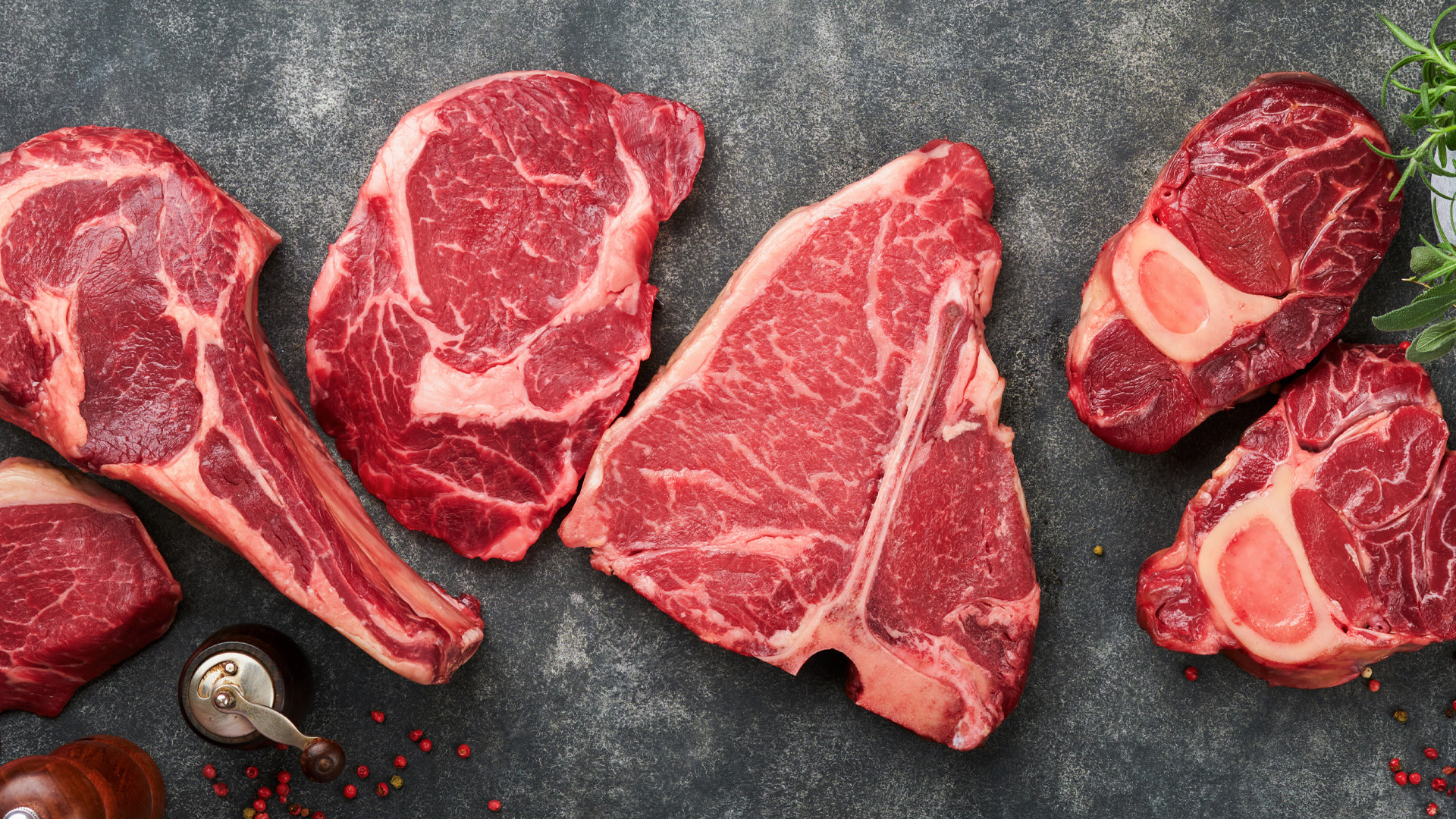
This is the question that surprises most first-time buyers in the best possible way. A half cow does not just give you ground beef — it gives you the entire animal split in half, meaning you receive premium steaks, slow-cook roasts, ribs, and everything in between. The exact breakdown is customized by you through a cut sheet we send before your processing date.
On the cut sheet, you decide how thick your steaks are cut, whether you want bone-in or boneless roasts, how many pounds per package for ground beef, whether you want stew meat or additional roasts from the chuck section, and more. First-time buyers often tell us this part feels overwhelming, but our team walks you through it on the phone. Most people are done in ten minutes.
Complete Cut List for a Half Cow
Most families who buy their first half cow from us choose a balanced split — roughly one third steaks, one third roasts, and one third ground beef. Families with young children often shift more toward ground beef and chuck roasts for easy weeknight meals. Families who grill frequently tend to load up on steaks and short ribs. There is no wrong answer, and you can adjust your preferences with each purchase.
How Much Freezer Space Do You Need for a Half Cow
Before you call to book, sort out your freezer situation first. This is the single most common oversight among first-time buyers — ordering the beef and then scrambling to find somewhere to put it. The rule of thumb is simple: plan on one cubic foot of chest freezer space for every 35 to 40 pounds of packaged beef.
A half cow returning 175 to 250 pounds of packaged beef needs between 7 and 9 cubic feet of dedicated freezer space. That means a standard standalone chest freezer — not your kitchen refrigerator freezer. Even a large side-by-side refrigerator typically has only 3 to 5 cubic feet of freezer capacity, which is nowhere near enough. A new chest freezer in the 7 to 10 cubic foot range costs between $180 and $280 at most appliance stores and pays for itself entirely within the first year of savings.
| Purchase Size | Packaged Yield | Freezer Space Needed | Recommended Chest Freezer |
|---|---|---|---|
| Quarter Cow | 85–120 lbs | 3–4 cubic feet | 5 cu ft compact |
| Half Cow | ~250 lbs | 7–9 cubic feet | 7–10 cu ft standard |
| Whole Cow | 350–500 lbs | 14–18 cubic feet | 15–20 cu ft large chest |
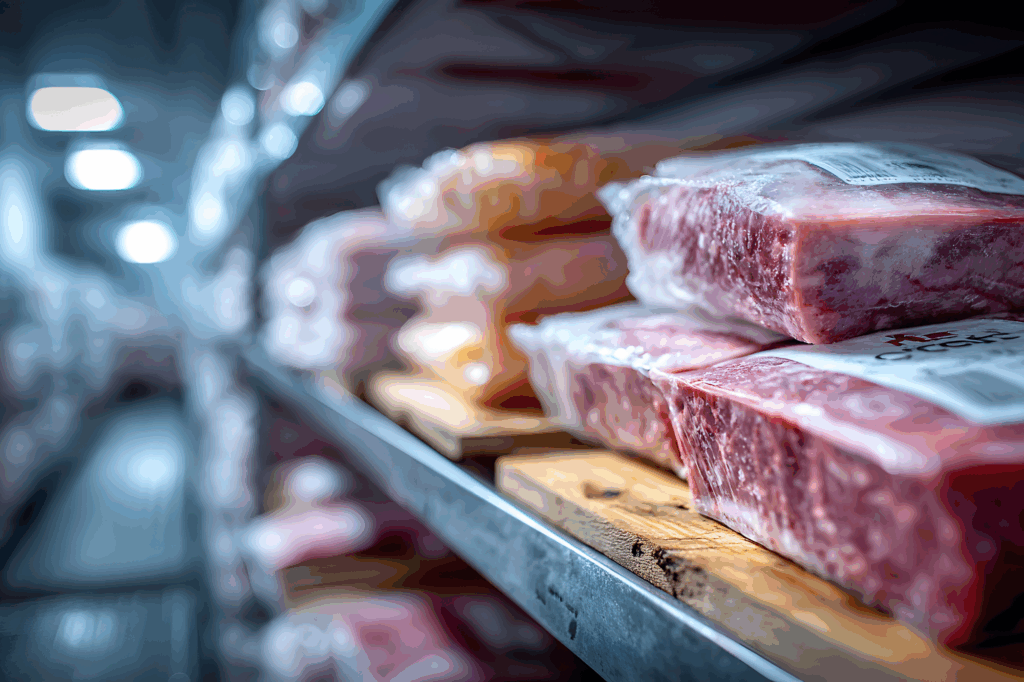
Storage tip: When your beef arrives, organize it by cut type — steaks together, roasts together, ground beef together. Label the date on each package with a marker. Vacuum-sealed beef from our farm lasts 12 to 18 months in a properly maintained chest freezer at 0 degrees Fahrenheit. Ground beef is best used within 4 to 6 months for peak flavor.
Why Grass-Fed Pasture-Raised Beef Matters for Your Family
The word "grass-fed" is used loosely in grocery store marketing, but what it means at Rural Valley Farms is specific: our cattle spend their entire lives on open Pennsylvania pasture, eating grass year-round. They are never moved to a feedlot. They are never given supplemental grain to accelerate weight gain. They grow at the pace nature intended.
This matters beyond just being a feel-good story. Grass-fed and grass-finished beef has a measurably different nutritional profile compared to conventional grain-finished beef. The fat composition is different, the micronutrient content is different, and the flavor is distinctly different — deeper, more complex, and more satisfying than the pale, mild flavor of feedlot beef. Once your family has eaten genuinely pasture-raised beef for a few months, most people tell us they cannot go back to what they were buying at the grocery store.
Grass-Fed vs. Grain-Fed: What the Research Shows
- Grass-fed beef contains 2 to 5 times more omega-3 fatty acids than conventional grain-fed beef — the same heart-healthy fats found in salmon
- Significantly higher levels of conjugated linoleic acid (CLA), a naturally occurring fatty acid associated with reduced body fat and lower inflammation markers
- Higher vitamin E content — pasture-raised cattle produce beef with up to 4 times more vitamin E than feedlot animals
- No added hormones, growth promotants, or synthetic additives at any stage of raising or processing
- No routine antibiotic use — our animals are only treated if they are sick, and any treated animal is removed from the food supply
- Conventional feedlot beef frequently contains residual antibiotic compounds and synthetic hormone metabolites from standard production practices
- Grocery store ground beef is routinely blended from dozens or hundreds of animals across multiple processing facilities with no traceability to a single farm
Common Mistakes First-Time Buyers Make
After years of selling beef shares to Pennsylvania families, we have seen the same avoidable mistakes come up repeatedly. Knowing these ahead of time saves you frustration and ensures your first experience buying in bulk goes smoothly.
Waiting too long to book. This is the most common and most costly mistake. Our 2026 slots, particularly those from April through August, fill up significantly faster than most people expect. Families who call in February secure their preferred date. Families who call in July are often told only late fall slots remain, if any. Do not wait until you need beef to call — call when you decide you want to do this.
Not having a freezer ready at pickup. Your beef will be cold, packaged, and ready to go when you arrive. If you have not sorted out freezer space before that day, you are dealing with a problem under time pressure. Buy your chest freezer a few weeks before your pickup date, run it for a few days to ensure it reaches temperature, and organize the space so loading is quick.
Rushing through the cut sheet. Your cut sheet is your one opportunity to customize exactly what you receive. Families who submit it quickly without thinking it through sometimes end up with more of one cut than they can easily use, or less of another that they wish they had requested more of. Spend twenty minutes thinking through how your household actually cooks. If you are unsure, call us — we help with this every day.
How to Reserve Your 2026 Beef Processing Slot
Reserving your slot at Rural Valley Farms takes one phone call and about ten minutes. There is no online form, no waiting list, no complicated process. We keep it simple because farming is already complicated enough.
Step-by-Step: From Your First Call to Freezer Full of Beef
- Step 1: Call (724) 809-7802. Speak directly with our team. We will tell you which 2026 dates are still available and walk you through the purchase sizes and pricing. No pressure, just honest information.
- Step 2: Choose your size and processing date. Decide between a quarter, half, or whole cow and pick a date that works for your schedule. A $250 deposit holds your slot.
- Step 3: Pay your $250 deposit. A $250 deposit is required to hold your processing slot. This applies directly toward your final balance — it is not a separate fee on top of the price.
- Step 4: Complete your cut sheet. About 4 to 6 weeks before your processing date, we send you a cut sheet to fill out. This is where you specify every detail of how you want your beef butchered and packaged.
- Step 5: Pick up your beef. Your order is vacuum-sealed, labeled, and ready for your freezer within 10 to 14 days of the processing date. Come in, pay your remaining balance, and leave with your beef.
2026 availability is not guaranteed. Spring and summer processing dates at Rural Valley Farms fill out months in advance. If you are reading this and considering it, the right time to call is now — not when you run low on beef. Reach us at (724) 809-7802, Monday through Saturday, 8am to 6pm Eastern.
Frequently Asked Questions About Buying Bulk Beef From a Farm
These are the questions Pennsylvania families ask us most often before booking their first beef share.
Reserve Your Half Cow From a Pennsylvania Farm Today
No hormones. No antibiotics. No mystery. Pasture-raised beef from our Butler County farm, direct to your freezer at a fraction of grocery store prices.
(724) 809-7802 Monday through Saturday, 8am to 6pm Eastern Call to Reserve Your 2026 Slot